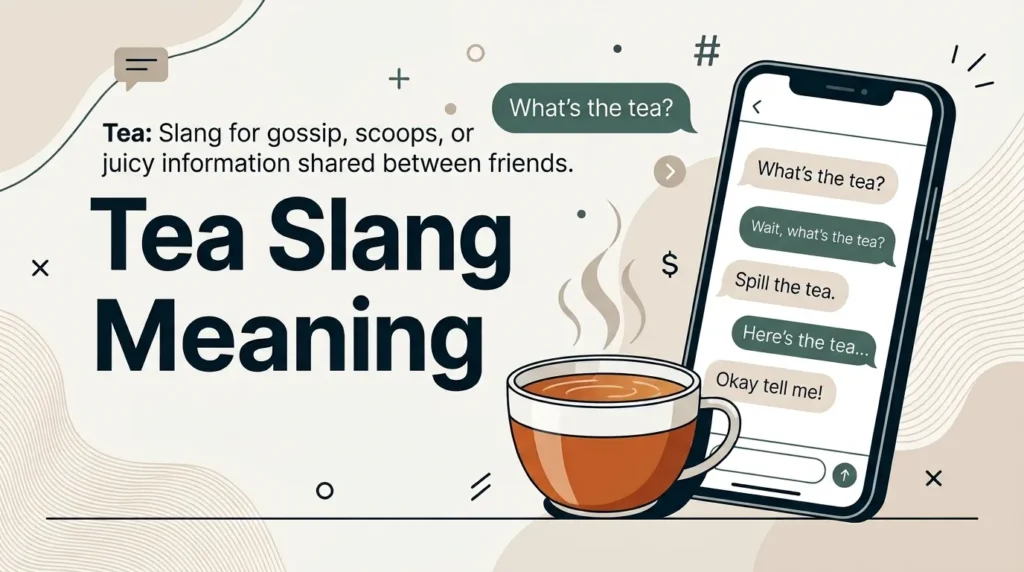

“Tea” in slang usually means gossip, personal information, rumors, or interesting details about a situation. When someone asks for the “tea,” they want the inside story or the latest update. The phrase is especially common in casual conversations, texting, and social media.
The meaning of “tea” depends on context. It can refer to harmless updates between friends, dramatic rumors, celebrity news, or someone’s honest opinion. Phrases like “spill the tea” and “what’s the tea?” are usually playful, but the tone can change depending on the relationship between the speakers and the topic being discussed.
| Question | Answer |
|---|---|
| Most common tea slang meaning | Gossip, information, or an interesting story |
| Common phrase | “Spill the tea” = share the details |
| Typical context | Texting, social media, casual conversations |
| Tone | Usually playful, curious, or dramatic |
| Pronunciation | “Tea” sounds like the letter T |
| Formality | Informal; avoid in most professional writing |
| Can it be rude? | Yes, if it involves private information or harmful rumors |
What Does Tea Mean in Slang?
In modern slang, “tea” means information worth sharing, especially gossip, personal updates, drama, or surprising details. It is often used when someone wants to know what happened behind the scenes.
For example:
“What’s the tea about the new manager?”
This means:
“What is the inside information about the new manager?”
The word does not always mean negative gossip. Someone can share “tea” about a funny event, relationship update, celebrity news, or an unexpected situation. The meaning is usually closer to “tell me what’s going on” than simply “spread rumors.”
The expression became especially common in online conversations, where people use short phrases to react to drama, entertainment news, friendships, and social situations.
Quick Meaning of Tea by Context
| Context | Likely Meaning | Example | Usage Level |
|---|---|---|---|
| Friends texting | Personal updates or gossip | “Give me the tea!” | Very common |
| Social media | Drama, opinions, or trending information | “The tea is wild today.” | Very common |
| Celebrity discussions | Behind-the-scenes details | “What’s the tea on that interview?” | Common |
| Workplace chats | Informal updates or rumors | “Any tea about the office changes?” | Context-dependent |
| Older meanings | Actual tea beverage or other meanings | “I drink tea every morning.” | Depends on context |
Why Does “Tea” Mean Gossip?
The slang meaning of “tea” developed from a combination of social conversation, storytelling, and internet culture. The idea is that people gather around a drink while exchanging interesting information, much like sharing news during a casual conversation.
Over time, “tea” became a shorthand way to describe the information itself rather than the activity of talking. Instead of saying:
“Tell me the latest gossip.”
Someone might say:
“Tell me the tea.”
The phrase feels shorter, more playful, and more connected to online communication.
The slang meaning is now widely recognized in casual English, especially among people who use social media frequently.
What Does “Spill the Tea” Mean?
“Spill the tea” means to reveal information, share details, or tell the full story about something.
It is usually a playful request for someone to explain what happened.
Examples:
“You said there was drama yesterday. Spill the tea.”
Meaning:
“Tell me everything that happened.”
The phrase can be used seriously or jokingly. Friends may use it when discussing relationships, workplace situations, entertainment news, or funny events.
However, “spill the tea” does not always mean someone should reveal private information. If the details involve someone’s personal life, sharing them without permission may be inappropriate.
What Does “What’s the Tea?” Mean?
“What’s the tea?” means “What’s the latest information?” or “What happened?”
It is similar to asking:
- What’s going on?
- What’s the story?
- What’s the update?
- What did I miss?
Examples:
“I heard something happened at the party. What’s the tea?”
This does not necessarily mean the speaker wants harmful rumors. It often expresses curiosity in a casual or humorous way.
Also Read: Puerto Rican Slang Meanings and Everyday Boricua Phrases
Common Tea Slang Expressions
Spill the Tea
Meaning: Share the details or reveal information.
Example:
“You have to spill the tea about your trip.”
Tone:
- Friendly
- Curious
- Playful
What’s the Tea?
Meaning: Asking for the latest news or explanation.
Example:
“Everyone is talking about the announcement. What’s the tea?”
Tone:
- Curious
- Casual
Hot Tea
Meaning: Interesting, dramatic, or surprising information.
Example:
“There’s some hot tea about that new show.”
“Hot” suggests the information is exciting or dramatic.
Sip the Tea
Meaning: Watch, listen, or enjoy drama without getting directly involved.
Example:
“I’m just here to sip the tea.”
This suggests someone is observing rather than participating.
No Tea, No Shade
Meaning: A phrase used to say someone is not trying to criticize or insult.
Example:
“No tea, no shade, but that outfit is unusual.”
The speaker is often signaling that they are making a comment without intending serious hostility.
Tea Meaning in Text Messages
In texting, tea usually means gossip, updates, or interesting information. Because texting encourages short expressions, slang terms like “tea” allow people to communicate tone quickly.
Examples:
Person A:
“Did you hear what happened?”
Person B:
“No. Give me the tea.”
Meaning:
“Tell me what happened.”
Another example:
“The tea from last night was crazy.”
Meaning:
“The information or drama from last night was surprising.”
The meaning usually becomes clear from nearby words. If someone says:
“I need tea.”
they may literally mean the drink.
If someone says:
“I need the tea.”
they probably mean information.
The small word “the” often changes the interpretation.
Tea Meaning on Social Media
On social media platforms, “tea” is commonly associated with discussions about:
- Celebrity news
- Influencer conflicts
- Entertainment updates
- Relationship drama
- Opinions and reactions
- Trending conversations
People may comment:
“Drop the tea.”
Meaning:
“Share the details.”
Or:
“The tea is everywhere today.”
Meaning:
“Many people are discussing this information.”
Social media has helped make the expression widely recognizable, but people still use it differently depending on their community and communication style.
How Context Changes the Meaning of Tea
The word “tea” is a good example of a slang term where context matters more than the word itself. The same word can refer to a drink, information, gossip, or a personal update depending on the conversation.
Readers can usually identify the slang meaning by looking at:
The Words Around It
Certain phrases strongly suggest the slang meaning.
Examples:
“Spill the tea.”
Almost always means:
“Tell me the details.”
But:
“I spilled my tea.”
usually means:
“I accidentally knocked over my drink.”
The surrounding words provide the clue.
Also Read: Cyberpunk Slang Explained: Choom, Gonk, Preem and More
The Topic of Conversation
The subject being discussed can change the meaning.
Example:
“The tea about the new album is interesting.”
The person is probably talking about news, opinions, or behind-the-scenes information.
Example:
“This tea tastes amazing.”
This is about the beverage.
The Relationship Between Speakers
“Tea” is usually used among people who have a casual relationship.
Friends may say:
“Give me the tea.”
A manager in a formal meeting probably would not say:
“What’s the tea about the project?”
They might say:
“What’s the latest update?”
The slang version creates a more relaxed and playful tone.
Public Versus Private Information
The word “tea” does not automatically mean something is appropriate to share.
There is a difference between:
- Fun updates
- Public news
- Personal stories someone chose to share
- Private information shared without permission
For example:
“The tea about the concert announcement is exciting.”
This refers to public information.
But:
“The tea about someone’s private relationship”
may involve information that should not be shared.
The word describes the type of information, not whether sharing it is respectful.
Tone and Emotional Meaning of Tea
The slang word “tea” often carries a specific social tone. It is usually informal, expressive, and conversational.
Playful or Excited Tone
Many people use “tea” simply because it makes a conversation feel more entertaining.
Example:
“Okay, tell me the tea!”
The speaker is showing curiosity in a fun way.
Dramatic Tone
“Tea” is often connected with situations involving conflict, surprises, or controversy.
Example:
“The tea from that interview is unbelievable.”
Here, “tea” suggests that the information is surprising or dramatic.
Neutral Information Tone
Sometimes “tea” is used without judgment.
Example:
“What’s the tea on the new schedule?”
This simply means:
“What information do you have?”
Sarcastic or Humorous Tone
People may use “tea” jokingly when there is no serious gossip involved.
Example:
“The tea is that my cat ignored me all day.”
The speaker is using slang for humor.
Real Conversation Examples Using Tea
Friends Talking
Alex:
“I heard you had an interesting weekend.”
Jordan:
“I did. Want the tea?”
Meaning:
Jordan is asking if Alex wants to hear the story.
Social Media Conversation
Comment:
“Someone explain what happened.”
Reply:
“Waiting for someone to drop the tea.”
Meaning:
The person wants someone to provide details.
Celebrity Discussion
Person A:
“Did you see the interview?”
Person B:
“Yes, the tea was unexpected.”
Meaning:
The interview contained surprising information.
Workplace Situation
Coworker A:
“Do you know why everyone is talking today?”
Coworker B:
“No idea. What’s the tea?”
Meaning:
“What is the latest information?”
Note: This usage is casual and may not fit every workplace culture.
Relationship Conversation
Friend A:
“You said something happened yesterday. What’s the tea?”
Friend B:
“We finally decided to move.”
Meaning:
The “tea” is an important personal update, not necessarily drama.
Funny Usage
Person A:
“What’s the tea?”
Person B:
“My dog learned how to open the cabinet.”
Meaning:
The speaker is jokingly treating a normal event like exciting gossip.
Also Read: YN Meaning Slang: What YN Means on TikTok and in Text
Grammar and Language Role of Tea
In slang usage, “tea” is usually a noun.
It refers to the information, story, or details being discussed.
Examples:
- “I have some tea.”
- “The tea is interesting.”
- “That’s the tea.”
- “She shared the tea.”
The word is usually written in lowercase when used as slang:
- Correct: “What’s the tea?”
- Also understandable: “What’s the Tea?”
Capitalization may depend on style, but lowercase is more common for everyday slang.
Is Tea an Acronym?
No. In slang usage, “tea” is not an acronym.
Some people online connect the word with the letter “T,” but modern slang use generally treats “tea” as a regular word that developed a new meaning.
It is different from abbreviations where each letter represents another word.
Can Tea Be Used as a Verb?
The common slang usage is as a noun.
However, casual internet language sometimes creates playful variations.
Examples:
- “She’s serving tea.”
- “They’re giving tea.”
These expressions mean someone is providing interesting information.
The exact wording may vary between communities.
How to Reply When Someone Says “Tea”
The best reply depends on the situation and your relationship with the person.
Friendly Replies
Use these when you genuinely want to hear the story.
Examples:
- “Tell me everything.”
- “I’m listening.”
- “Okay, what happened?”
- “Give me the details.”
Funny Replies
For playful conversations:
- “I’m ready.”
- “I brought snacks.”
- “The floor is yours.”
- “Drop the details.”
Neutral Replies
When you want information without sounding overly dramatic:
- “What’s the update?”
- “What happened?”
- “Can you explain?”
Professional Alternatives
In work settings, replace “tea” with clearer phrases:
- “What’s the latest update?”
- “What’s the current situation?”
- “Is there any new information?”
The slang version may feel too casual depending on the workplace.
Similar Terms and Commonly Confused Expressions
| Term | Meaning | Main Difference | Typical Context |
|---|---|---|---|
| Gossip | Information about other people, often unofficial | Can sound more negative than “tea” | Social conversations |
| Rumor | Unconfirmed information | Suggests uncertainty | News or personal discussions |
| Scoop | New or exclusive information | Often connected with news or discoveries | Media or announcements |
| Update | New information about a situation | More neutral and professional | Work and everyday life |
| Drama | Conflict or emotional situations | Focuses on the event rather than the information | Social situations |
Tea vs Gossip
Although these words overlap, they are not exactly identical.
Tea often has a playful or entertaining feeling.
Example:
“Tell me the tea about the party.”
Gossip can sound more negative because it may involve discussing someone who is not present.
Example:
“They were spreading gossip.”
A person may call something “tea” to make it sound lighter, but the actual content still matters.
Tea vs Rumor
A rumor is information that may not be confirmed.
Tea can include rumors, but it can also include confirmed updates.
Example:
“The tea is that the restaurant is opening next month.”
This may simply be new information.
Who Uses the Term Tea?
The slang meaning of “tea” is strongly associated with casual online communication, entertainment discussions, and informal conversations.
It is commonly seen among:
- Social media users
- Online communities
- People discussing entertainment
- Friends having casual conversations
- Communities that use expressive internet slang
However, slang usage varies. Not everyone uses “tea,” and some people may understand the expression without using it themselves.
Age, location, online habits, and personal communication style all influence whether someone naturally uses the term.
Origin and Evolution of Tea Slang
The exact development of “tea” as slang has been debated, and its history is connected to different forms of informal conversation and storytelling.
A major part of its modern popularity came from internet culture, where short expressive phrases spread quickly through online communities.
The phrase “spill the tea” helped make the expression recognizable because it combines the idea of revealing information with the playful image of accidentally spilling something.
Today, “tea” has moved beyond one specific online group and appears broadly in casual English conversations, especially when people discuss entertainment, relationships, or social situations.
Its meaning continues to depend heavily on tone and context.
Is Tea Slang Offensive, Rude, or Inappropriate?
The word “tea” itself is not offensive. It is generally considered casual slang.
However, the way someone uses it can create problems.
Usually Appropriate
Examples:
- Talking about public events
- Sharing funny stories
- Discussing entertainment news
- Asking friends for updates
Potentially Problematic
Using “tea” can become inappropriate when it involves:
- Private personal information
- Hurtful rumors
- Attacking someone’s reputation
- Sharing information without permission
The word does not determine whether a conversation is respectful. The subject and intention matter more.
Real-World Interpretation of Tea
“Tea” works as a social signal as much as a definition. When someone asks for “the tea,” they are often inviting a more personal, informal style of conversation.
The phrase suggests curiosity and connection. It turns a simple request for information into a more playful interaction.
At the same time, understanding the difference between curiosity and unwanted gossip is important. Knowing the slang meaning helps people participate naturally without assuming every piece of information should be shared.
Also Read: SSA Meaning Slang: What It Means on TikTok & Text
Frequently Asked Questions
What does tea mean in texting?
In texting, tea usually means gossip, details, or interesting information about a situation. Someone saying “What’s the tea?” is usually asking for an update or explanation. The exact meaning depends on the conversation, because “tea” can still refer to the drink in other contexts.
What does “spill the tea” mean?
“Spill the tea” means to share information, tell the story, or reveal details about something. It is usually playful and informal. The phrase does not always mean spreading rumors; it can simply mean telling someone what happened.
Is tea slang still used?
Yes, “tea” remains a recognizable slang term in casual conversations and online spaces. Its popularity and frequency vary between communities, but many people understand expressions such as “spill the tea” and “what’s the tea?”
Is tea the same as gossip?
Not exactly. Tea can include gossip, but it is often a broader term for interesting information or updates. Gossip may carry a more negative meaning, while tea is often used in a playful or casual way.
Can I use tea in a professional setting?
Usually, “tea” is too informal for most professional communication. In workplaces, clearer terms such as “update,” “information,” or “latest news” are usually more appropriate.
What does “that’s the tea” mean?
“That’s the tea” means “that is the truth,” “that is the situation,” or “that is the information being shared.” It is often used to emphasize a final point in a casual conversation.
Conclusion
The slang meaning of “tea” is information, gossip, or an interesting update, especially in casual conversations and online communication. Expressions like “spill the tea” and “what’s the tea?” have become common ways to ask for details or share a story.
The meaning depends on context, tone, and the relationship between the people talking. While tea can be fun and harmless, the information being shared still matters. Understanding how the term works helps you recognize when it is playful, casual, or better replaced with a more neutral word.