
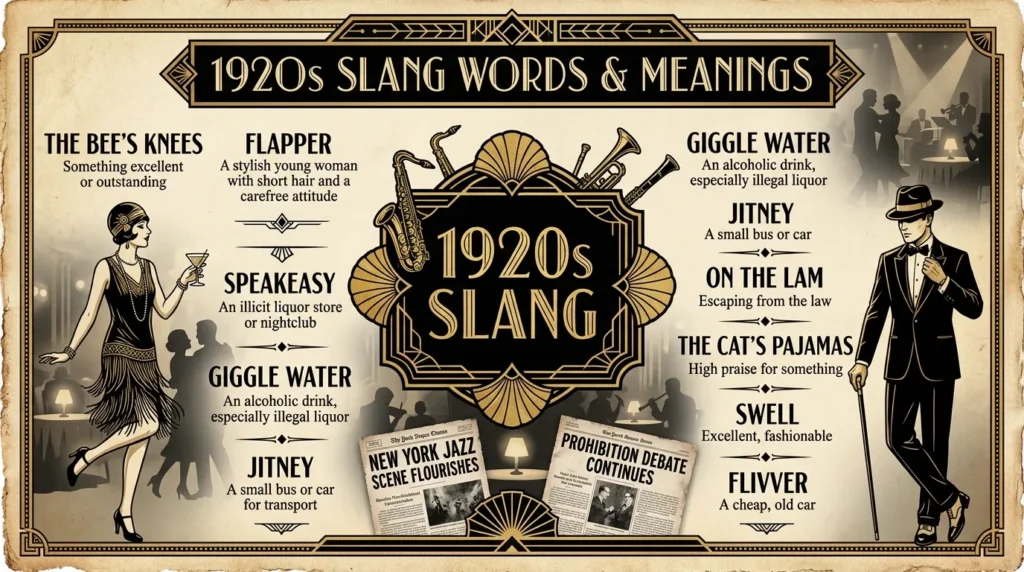

1920s slang refers to the informal words and expressions used during the 1920s, especially in the United States during the Jazz Age. These terms reflected the decade’s changing culture, including nightlife, music, fashion, automobiles, and a growing sense of independence. Words like “bee’s knees,” “the cat’s pajamas,” and “flapper” became popular ways to describe people, things, and trends.
The meaning of 1920s slang often depended on the situation, social group, and tone of the speaker. Some expressions were playful compliments, while others described lifestyles, emotions, or cultural movements. Understanding the context behind these words helps explain how people communicated during one of the most influential decades in modern history.
Quick Answer Box
| Topic | Explanation |
|---|---|
| Meaning | 1920s slang includes informal words and phrases commonly used during the Jazz Age. |
| Context | Mostly connected with American culture, music, fashion, nightlife, and social changes. |
| Tone | Often playful, energetic, humorous, or expressive. |
| Formality | Informal language used in casual conversations. |
| Usage | Mostly historical today, but some phrases remain recognizable. |
Article
What Does 1920s Slang Mean?
1920s slang describes the casual language people used during the decade known as the Roaring Twenties. The period brought major cultural changes, and language evolved alongside new forms of entertainment, fashion, and social behavior.
Many slang expressions from this era were created to sound exciting, exaggerated, or stylish. Young people, musicians, performers, and urban communities especially influenced the way these words spread.
For example:
- “The bee’s knees” meant something excellent, impressive, or highly admired.
- “The cat’s pajamas” described someone or something considered outstanding.
- “Doll” was a casual term used for an attractive or charming woman.
- “Hotsy-totsy” meant excellent, perfect, or pleasing.
Although many expressions are no longer used in everyday speech, they remain popular when people talk about vintage culture, costumes, films, and historical settings.
Why Was 1920s Slang So Popular?
The 1920s was a decade of rapid social change. New technology, jazz music, dance styles, and entertainment industries influenced everyday communication.
Several groups helped spread slang:
Jazz Musicians
Jazz culture introduced creative expressions and helped slang move between cities and communities.
Flappers
Young women known as flappers challenged traditional expectations through fashion, dancing, and social independence. Their lifestyle influenced many popular expressions.
Movies and Radio
Silent films, radio programs, and celebrity culture allowed certain phrases to reach wider audiences.
Urban Communities
Large cities became centers for new ideas, and slang often developed faster in places where different cultures interacted.
Also Read: NTM Meaning Slang: What It Means in Text and Chat
Popular 1920s Slang Words and Their Meanings
| Slang Word or Phrase | Meaning |
|---|---|
| Bee’s knees | Something excellent or impressive |
| Cat’s pajamas | Someone or something amazing |
| Hotsy-totsy | Perfect or excellent |
| Big cheese | An important person |
| The real McCoy | The genuine article |
| Heebie-jeebies | A feeling of nervousness or fear |
| Giggle water | Alcoholic drinks |
| Ritzy | Fancy, luxurious, or high-class |
| Whoopee | Fun, excitement, or celebration |
| Scram | Leave quickly |
Famous 1920s Slang Phrases Explained
“The Bee’s Knees”
“The bee’s knees” was one of the most famous expressions of the decade. It was used to describe something considered exceptional or impressive.
Example:
“Her new dress is the bee’s knees.”
Meaning:
Her dress is stylish and admired.
“The Cat’s Pajamas”
This phrase described someone or something that was considered fashionable, impressive, or exciting.
Example:
“That new jazz club is the cat’s pajamas.”
Meaning:
The jazz club is considered amazing.
“Big Cheese”
“Big cheese” referred to an important person or someone with influence.
Example:
“He thinks he is the big cheese around here.”
Meaning:
He believes he is the person in charge.
“Giggle Water”
During the Prohibition era, slang developed around alcohol. “Giggle water” was a humorous term for alcoholic drinks.
Example:
“The party had plenty of giggle water.”
Meaning:
The party included alcoholic beverages.
1920s Slang Related to Fashion and Lifestyle
The Roaring Twenties introduced new styles and attitudes. Many slang terms reflected confidence, luxury, and modern living.
Examples include:
- Ritzy — expensive or glamorous
- Dapper — stylish and well-dressed
- Snazzy — fashionable or attractive
- Sharp — stylish appearance
- Swanky — luxurious or impressive
These words showed the decade’s fascination with elegance, entertainment, and personal expression.
Also Read: Scottish Slang: 60+ Words and Phrases With Meanings
1920s Slang From the Jazz Age
Jazz culture strongly influenced the vocabulary of the 1920s. Musicians and nightlife communities created expressions connected with music, dancing, and social gatherings.
Examples:
- Jazz baby — someone connected with jazz culture
- Hot — exciting, impressive, or energetic
- Jive — playful or deceptive talk; later developed into broader meanings
- Gig — a performance or job, especially for musicians
Some of these words continued evolving and became part of modern language.
Real Examples of 1920s Slang in Conversation
Friends
Person 1: “Have you seen that new car?”
Person 2: “Yeah, it’s the bee’s knees.”
Meaning: The car is impressive.
Party Conversation
Person 1: “How was the dance last night?”
Person 2: “It was absolutely hotsy-totsy.”
Meaning: The event was excellent.
Fashion
Person 1: “Your outfit looks amazing.”
Person 2: “Thanks! I wanted something ritzy.”
Meaning: Stylish and luxurious.
Describing Someone Important
Person 1: “Who runs this company?”
Person 2: “He’s the big cheese.”
Meaning: He is the person in charge.
Are 1920s Slang Words Still Used Today?
Some 1920s slang expressions disappeared from normal conversation, while others survived.
Words like:
- classy
- dapper
- ritzy
- real McCoy
are still understood today.
However, phrases like “bee’s knees” and “cat’s pajamas” are usually used for humor, vintage themes, storytelling, or creating a nostalgic style.
Also Read: SYFM Meaning Slang: What Does SYFM Mean?
Similar Terms Related to 1920s Slang
| Term | Meaning | Difference |
|---|---|---|
| Jazz Age language | Expressions connected with 1920s music and culture | Focuses more on cultural influence |
| Vintage slang | Older informal expressions from different eras | Includes more than just the 1920s |
| Flapper slang | Words associated with young women of the 1920s | A narrower cultural category |
| Old-fashioned slang | Historical informal language | Covers many time periods |
Offensive or Inappropriate Usage
Most 1920s slang terms are harmless today because they are mainly used in historical or entertainment contexts.
However, some language from the era may reflect outdated social attitudes. When using historical slang, it is important to understand the cultural background and avoid using terms without knowing their meaning or impact.
FAQs
What is the most famous 1920s slang word?
One of the most recognizable 1920s slang phrases is “the bee’s knees.” It was used to describe something excellent, impressive, or highly admired during the Jazz Age.
Why did people use slang in the 1920s?
People used slang to express creativity, identity, and connection with changing social trends. Jazz music, nightlife, fashion, and new technology all influenced the way people spoke.
What did “cat’s pajamas” mean in the 1920s?
“Cat’s pajamas” meant something excellent, fashionable, or impressive. It was a playful expression used to show admiration.
Did flappers create 1920s slang?
Flappers helped popularize the language and culture of the decade, but 1920s slang came from many groups, including musicians, city communities, and entertainers.
Is 1920s slang still used today?
Some expressions remain familiar, but most are now used mainly in historical discussions, vintage events, movies, and creative writing.
What is another word for 1920s slang?
Related terms include Jazz Age language, Roaring Twenties expressions, vintage slang, and flapper-era vocabulary.
Conclusion
1920s slang captures the energy, creativity, and cultural changes of the Roaring Twenties. These words reflected a decade shaped by jazz music, new lifestyles, fashion trends, and social transformation. Expressions like “the bee’s knees” and “the cat’s pajamas” show how people used playful language to describe excitement and admiration. While many terms are no longer part of everyday speech, they remain valuable for understanding history and culture. The meaning of any slang expression depends on its context, making historical language more interesting and meaningful to explore.
Related Slang Terms
Explore more slang meanings from our dictionary:


Pingback: 1940s Slang Meaning: Popular 1940s Slang Words and Phrases Explained