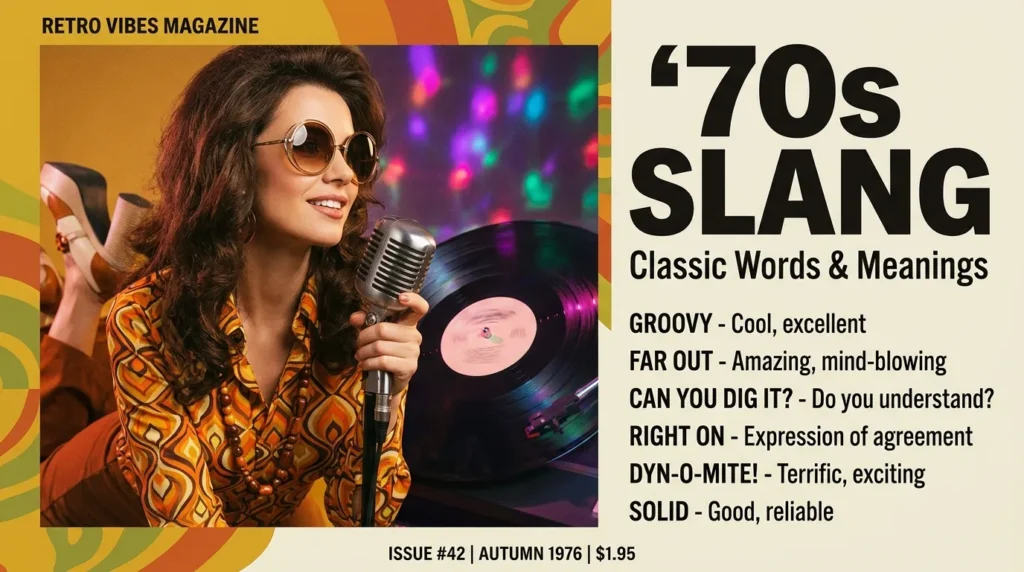

70s slang refers to the informal words and expressions popular during the 1970s. These terms reflected the decade’s music, fashion, social movements, television, and changing attitudes. Common examples include “groovy,” “far out,” “right on,” “psyched,” and “boogie.” Many 70s slang words expressed excitement, approval, surprise, friendship, or a relaxed lifestyle.
Some expressions from the 1970s are still recognized today, while others feel strongly tied to the era. Context matters because some words changed meaning over time, moved into different communities, or became popular again through movies, music, and online culture.
| Quick Detail | Answer |
|---|---|
| Most common meaning | Informal expressions used during the 1970s |
| Popular examples | Groovy, far out, right on, chill out, boogie |
| Main influences | Music, television, youth culture, social changes |
| Tone | Usually casual, playful, expressive |
| Still used today? | Some terms remain recognizable or are used nostalgically |
What Is 70s Slang?
70s slang describes the casual vocabulary people used in everyday conversations during the 1970s. It was especially connected with younger generations, music scenes, fashion trends, and changing social attitudes.
The decade had a unique cultural identity. Disco became mainstream, rock music expanded, television influenced everyday speech, and different youth groups developed their own expressions. Slang became a way for people to show personality, belonging, humor, and attitude.
Unlike formal language, slangiify changes quickly. Some words disappear after a few years, while others become part of everyday vocabulary. A few expressions from the 1970s survived because they captured feelings that remain easy to understand, such as excitement, approval, or surprise.
Why Did 70s Slang Become So Popular?
The 1970s was a period when entertainment and youth culture had a major effect on language. People heard new expressions through songs, movies, television programs, and social groups.
Music played one of the biggest roles. Disco culture introduced energetic words connected with dancing and having fun, while rock and counterculture communities used more relaxed or rebellious expressions.
Television also helped spread slang beyond local communities. A phrase that started in one area could quickly become familiar across the country because millions of people heard it repeatedly.
The Difference Between 70s Slang and Modern Slang
Slang from the 1970s and slang from today often serve the same purpose: making conversations feel casual and expressive. The biggest difference is the speed of change.
Modern slang can spread globally within hours through social media. In the 1970s, phrases usually traveled through music, television, neighborhoods, schools, and personal conversations.
Many 70s expressions also focused on attitude and emotion. Words like “groovy” and “far out” were less about describing objects and more about showing a reaction.
Popular 70s Slang Words and Meanings
Groovy
“Groovy” is one of the most recognizable 70s slang words. It usually meant something was excellent, enjoyable, fashionable, or impressive.
People used it to show approval or excitement.
Examples:
- “That song is really groovy.”
- “Your new jacket looks groovy.”
Today, the word is often used humorously or nostalgically to create a vintage 1970s feeling.
Far Out
“Far out” expressed amazement, surprise, or strong approval. It could mean something was impressive, unusual, or exciting.
Examples:
- “You got tickets to the concert? Far out!”
- “That idea is far out.”
The phrase was strongly connected with relaxed and adventurous attitudes of the era.
Right On
“Right on” was a way to show agreement, encouragement, or support.
It could mean:
- I agree.
- That is correct.
- Good job.
- I support that.
Examples:
- “We should help more people in our community.”
- “Right on!”
The expression carried a positive and supportive tone.
Psyched
“Psyched” meant excited, enthusiastic, or mentally prepared for something.
Examples:
- “I’m psyched for the weekend.”
- “She was psyched about the concert.”
This word remains recognizable today and is still occasionally used.
Boogie
“Boogie” meant dancing, especially energetic dancing connected with disco and funk music.
Examples:
- “Let’s go boogie tonight.”
- “Everyone was boogieing on the dance floor.”
The word is strongly associated with 1970s party culture.
Chill Out
“Chill out” meant relaxing, calming down, or not worrying too much.
Examples:
- “Chill out, everything will be fine.”
- “We spent the afternoon chilling out.”
Although the phrase existed before the 1970s, it became much more common in casual speech around this period and remains widely used.
Dig
“Dig” had a meaning similar to “understand,” “like,” or “appreciate.”
Examples:
- “Do you dig this music?”
- “I really dig your style.”
It was especially common in informal conversations.
Also Read: Mid Meaning Slang: What “Mid” Means in Text and Online
Keep On Truckin’
“Keep on truckin’” meant continue moving forward, stay positive, or keep going despite difficulties.
It became associated with optimism and independence.
Example:
- “Things are difficult now, but just keep on truckin’.”
Can You Dig It?
This phrase asked whether someone understood or agreed with an idea.
Example:
- “We are changing the rules around here. Can you dig it?”
It carried a confident, expressive tone.
Boob Tube
“Boob tube” was a humorous nickname for television.
The phrase suggested that people spent too much time watching TV.
Example:
- “I spent the whole night watching the boob tube.”
Solid
“Solid” meant reliable, good, impressive, or trustworthy.
Examples:
- “That was a solid performance.”
- “He is a solid friend.”
The word is still used today with similar meaning.
Bummer
“Bummer” described something disappointing, frustrating, or unpleasant.
Examples:
- “The concert was canceled? That’s a bummer.”
- “Missing the trip was a real bummer.”
The word remains common in casual English.
70s Slang by Context
| Context | Common Expressions | Meaning |
|---|---|---|
| Approval | Groovy, right on, solid | Something good or impressive |
| Surprise | Far out, wow, no way | Amazement |
| Excitement | Psyched, pumped | Looking forward to something |
| Music and dancing | Boogie, jam | Enjoying music |
| Agreement | Right on, can you dig it | Showing support |
| Relaxation | Chill out | Calm down or relax |
70s Slang in Music and Pop Culture
Music was one of the strongest forces behind 1970s language. Different music communities developed expressions that represented their identity and lifestyle.
Disco Influence
Disco culture introduced words connected with dancing, nightlife, and celebration.
Expressions like “boogie” became closely linked with dance floors, parties, and upbeat music.
Disco language often focused on enjoyment, confidence, style, and having a good time.
Rock and Counterculture Influence
Rock communities continued using expressive phrases connected with freedom, individuality, and personal expression.
Words like “far out” and “dig” reflected a more relaxed and experimental communication style.
Television Influence
Television helped turn regional expressions into national phrases. Characters on popular shows often introduced viewers to new ways of speaking.
Because families watched the same programs, certain phrases became familiar across different age groups.
How 70s Slang Is Used Today
Many 70s slang words are no longer used exactly as they were during the decade. However, they continue appearing in movies, fashion discussions, music references, and nostalgic conversations.
Also Read: 2000s Slang: Popular Words, Meanings, and How People Used Them
Nostalgic Use
People often use 70s slang when they want to create a retro feeling.
Examples:
- A themed party invitation may use “groovy.”
- A vintage clothing brand may use 70s expressions.
- A movie set in the decade may include period-specific language.
Humorous Use
Some expressions are used jokingly because they strongly remind people of the 1970s.
Someone saying “groovy” today may be intentionally creating a playful vintage style.
Modern Survival
Some phrases survived because they fit naturally into modern conversations.
Examples:
- Chill out
- Psyched
- Solid
- Bummer
These expressions have moved beyond their original decade and became part of broader casual English.
Real Conversation Examples Using 70s Slang
Friends Talking About Music
Alex: I found an old record collection.
Sam: Far out! Those albums are classics.
Meaning: Sam is expressing excitement.
Planning a Party
Lisa: The band is playing disco music tonight.
Mike: Right on, let’s go.
Meaning: Mike agrees and supports the idea.
Talking About a New Outfit
Jamie: What do you think of this jacket?
Taylor: It’s totally groovy.
Meaning: Taylor thinks the jacket looks stylish.
Encouraging Someone
Chris: I’m nervous about starting my new job.
Pat: Chill out. You’ll do great.
Meaning: Pat is telling Chris to relax.
Talking About Dancing
Anna: Everyone was dancing at the party.
Mark: We were boogieing all night.
Meaning: Mark means they danced enthusiastically.
Tone and Meaning Behind 70s Slang
Slang is not only about dictionary definitions. The same word can feel different depending on who says it and why.
Friendly Tone
Many 70s expressions were casual ways to connect with friends.
Words like “right on” created a feeling of agreement and encouragement.
Playful Tone
Some phrases are now used playfully because they remind people of a specific era.
Calling something “groovy” today often has a fun, retro feeling.
Serious Tone
Certain expressions could also communicate genuine support.
For example, “right on” could show real agreement with someone’s beliefs or actions.
Are 70s Slang Words Offensive?
Most popular 70s slang words are not offensive. However, slang always depends on context.
A phrase that sounds playful among friends may feel strange or inappropriate in a professional setting.
Workplace Use
Some expressions may sound outdated in formal communication.
For example, using “groovy” in a business presentation may distract from the message.
Cultural Sensitivity
Some language from past decades may reflect attitudes that have changed. When discussing historical slang, it is important to understand the original context rather than repeat outdated expressions without awareness.
Also Read: Florida Slang: Words, Phrases, and Expressions Floridians Use
Grammar and Language Role of 70s Slang
Most 70s slang expressions function as informal words, phrases, or reactions.
Examples:
- Groovy: adjective
- Bummer: noun
- Chill out: verb phrase
- Right on: expression of agreement
- Boogie: verb
Because slang is flexible, some words can change roles depending on how people use them.
Similar Terms and Related Slang Eras
| Term Group | Difference | Typical Use |
|---|---|---|
| 60s slang | More connected with earlier counterculture movements | Social change, experimentation |
| 70s slang | Strong connection with disco, television, and relaxed expression | Casual conversation |
| 80s slang | More connected with technology, fashion, and youth trends | Pop culture and entertainment |
The decades overlap because language does not change overnight. Many expressions remain popular across multiple generations.
Who Used 70s Slang?
70s slang was especially common among younger people, but many expressions spread across wider communities.
Usage depended on:
- Age
- Location
- Social group
- Music interests
- Local culture
Not every person in the 1970s used the same expressions. Slang varied between communities, and some phrases were more popular in certain groups than others.
The Evolution of 70s Slang
The meaning of slang changes as generations reinterpret words.
A phrase that once sounded completely normal may later become associated with nostalgia or humor.
Some 70s expressions became permanent parts of casual English, while others remained historical reminders of the decade.
Language survives when people continue finding a reason to use it.
How to Use 70s Slang Naturally
If you want to use 70s slang, context matters.
Good situations include:
- Retro events
- Creative writing
- Casual jokes
- Conversations about the decade
- Entertainment discussions
Avoid forcing too many vintage expressions into normal conversation because it may sound unnatural.
Using one phrase naturally is usually more effective than using many outdated expressions together.
Frequently Asked Questions
What is the most popular 70s slang word?
“Groovy” is one of the most recognizable 70s slang words. It was commonly used to describe something excellent, enjoyable, or fashionable.
Is 70s slang still used today?
Yes. Some expressions remain common, while others are mainly used for nostalgia, humor, movies, and retro themes.
What did “groovy” mean in the 1970s?
“Groovy” meant something was good, impressive, stylish, or enjoyable. It was usually a positive expression.
What does “far out” mean?
“Far out” expressed surprise, excitement, or admiration. It could describe something unusual or impressive.
Did everyone in the 1970s use the same slang?
No. Slang varied by region, age group, social circles, and cultural interests.
Why do people still search for 70s slang?
People often search for 70s slang because of nostalgia, movies, music, writing projects, themed events, and interest in cultural history.
Is “groovy” appropriate in professional writing?
Usually not. It is an informal expression and works better in casual or creative situations.
Conclusion
70s slang captured the relaxed, expressive, and changing culture of the decade. Words like “groovy,” “far out,” “right on,” and “boogie” were more than simple vocabulary choices; they reflected music, entertainment, friendships, and social attitudes.
Some expressions disappeared, while others became familiar parts of casual English. Understanding 70s slang is less about memorizing words and more about recognizing the feelings and situations behind them. Context remains the key because slang always carries the personality of the people who use it.